
THROUGH ISLET BINOCULARS: KARI AARVALA, DIRECTOR
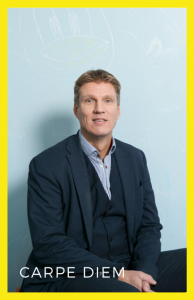
Tell us a little bit about yourself and what kind of organization & role do you work in?
I currently work for Microsoft’s Western Europe regional organization, responsible for the “SAP on Azure” business entity covering 12 countries in Western Europe (Western Europe excluding UK, Germany and France, which are separate regions). Our goal is to take SAP clients to Azure cloud, helping them with cloud transformation, and simultaneously many clients are also migrating to S/4HANA. Prior to this post which started in July, I spent 3.5 years leading the enterprise segment, a sales unit for larger enterprises in Finland, and in total my journey in IT has lasted 33 years, of which I spent 11 years with SAP. My children have already left home and my wife and I spend time also in Barcelona,where we have a second home.
What is Microsoft’s core message to its stakeholders and customers?
Digitalization is already here and happening all around us, enabling a huge number of tools and changes to business. Finnish companies have traditionally been good at adopting new technology, and they should now consider how to utilize digitalization and new tools in their own business. How to target the message and better serve customers, how to keep employees happy, how to improve operational efficiency, how to create new products or services? Faced with these issues, digitalization, cloud technology and other tools can help, accelerate and facilitate. Businesses can be either pioneers, go with the masses or lag behind. Depending on the industry, development can be really fast, and you should get prepared for changes in advance.
Surprisingly, Finland seems to be a little behind other European countries, and Finns could be better at grasping new opportunities. Digitalization is for everyone and its potential is endless, regardless of the core product.
How do you see your industry evolving? What mega trends affect the most and how?
Of course, mega trends include cloud computing, digitalization, urbanization, and in a sense a pursuit for individuality. Nowadays the buyer, be it consumer or business, knows a great deal, because before buying they have done their research and looked into options from many sources. Another related and growing trend is that behind traditional IT investments, both financing and making decisions, there are increasingly business lines, their needs and financing. As a result, the number of decision-makers is increasing and dispersed. These things are difficult to manage with old ways and tools, therefore it’s really important to put together your own digital strategy. Digitalization is not only about artificial intelligence and machine learning, but it also involves analytics tools, listening to social media, cognitive services, etc. — a vast number of things that can be combined to find updated business models relevant to each business.
Best things about your job?
Exporting SAP to Azure gives a broad overview of different countries, cultures, customers and industries across Europe. I constantly learn a lot, and I can act as a link between different countries, sharing best practices and examples. I travel a lot and always come back wiser. Taking business systems to the cloud is one of Microsoft’s global strategic focus areas and of course it is interesting to be at the so-called core. It has its own challenges, but investment, understanding and interest are high. Because business solutions is a big and wide-ranging area, working with partners and customers is extremely important. The partners’ knowledge and experience of the systems is invaluable to us.
What are the top three things on your desktop for next year?
- Accelerate the migration of business solutions and especially SAP to the cloud, as the deadline for transition to SAP S/4HANA is 2025 (end of support for legacy products) and migration planning is also time consuming.
- Increase partner knowledge and volume. We want to improve our in-depth partner knowledge of Azure and how to migrate, drive and maintain various business solutions there.
- The SAP and Microsoft joint project Embrace was released on October 20, 2019 and it brings us even closer together. We have an enormous amount of complementary expertise to provide.
What are the main criteria for choosing a technology partner? What do you expect from a partner?
The starting point is that there must be not only knowledge but also a common will and commitment, as well as perseverance. I would quote a customer who said in connection with sales and customer work that “you can never create a relationship when you need one”. Long-term cooperation and sustainable operation. Partners need to think about their own strengths and invest in them properly and in the long run. Of course, the choice of a technology partner depends on what kind of partner we need, what their realistic starting point is and how we complement each other best. A similar world of thinking and compatibility of corporate cultures make co-operation easier.
Why should companies export their ERP system to Azure? How does Microsoft help its customers in transformation?
Microsoft has been using SAP systems for over 25 years and is currently running it on Azure, just as SAP itself is running its system on Azure. We have had a long and fruitful cooperation, including support and product development, so the customer gets the best of both worlds. Technically, the O365 family already has Azure Active Directory, meaning SAP is fully integrated and all services are available on a single sign-on (SSO), both on-premise or mobile basis. Why export an enterprise resource planning system to Azure? Our customers have reported a clear improvement in system speed and stability. In addition, Microsoft invests a billion a year in security services, so customers can rest assured that we are always up to date with the latest security standards. The biggest benefit to the customer is that they get the best of both, thanks to the SAP & Microsoft partnership, and are able to cross-product, for example. Ourselves at Microsoft have 110,000 SAP users and seamless integration.
We help clients in the process by making reference architecture and providing architectural assistance in modelling and road map creation on how to take the customer to the cloud. We provide best practice models and tools and work with SAP and the customer to find the most risk-free, easy, and fastest way to migrate to the cloud without delays or disruptions. Microsoft’s own SAP was taken to the cloud in 2018 and I didn’t notice the transition in any way because there was no downtime. More than half of SAP’s cloud-shipped customers have taken SAP to Azure, and 2/3 are planning a migration. Azure is by far the largest cloud platform, so partners have a lot of expertise by now.
Your motto?
Carpe diem – seize the day.
#IsletterHighlight #Microsoft #partnership #collaboration #interview